

As you seek to carve out your digital footprint in the bustling metropolis of Phoenix, the significance of on-page SEO cannot be overstated. Mastering Advanced On-Page SEO Techniques for Phoenix Websites is your ticket to not only enhancing your website’s ranking but also solidifying your presence in an increasingly competitive market. In the realm of SEO, everything from the intricacy of your metadata to the agility of your page loading speed can make or break your online success. Through strategic SEO optimization, your website can garner the attention of search engines, making it more discoverable to your target audience.
When you hone the various components of on-page optimization, such as image optimization for brisk loading times and meticulous internal linking, you’re speaking directly to Google’s intricate algorithms. This dialogue between your website and search engines lays the groundwork for an optimal user experience and aligns with the ultimate goal of elevating your website ranking on the SERPs. Let’s embark on this journey to optimize your Phoenix website with precision and foresight.
Key Takeaways
- Embrace on-page SEO as a fundamental component for boosting search rankings.
- Optimize technical elements like meta tags and load speeds to enhance user experience.
- Strategic internal linking and image optimization are critical for speaking to search engine algorithms.
- Stay current with Google’s algorithm updates to ensure your Phoenix website remains competitive on SERPs.
- Use on-page SEO to demonstrate the relevance of your site to search queries directly.
Understanding the Importance of On-Page Optimization in SEO
Your journey through the nuanced world of SEO is incomplete without a deep dive into the realm of on-page optimization. This critical component of SEO serves as the foundation upon which your website’s ability to resonate with search engine algorithms is built. It goes well beyond inserting keywords into your content and focuses on technical aspects that are essential for a high-performance website.
On-page optimization involves a meticulous calibration of your website’s internal elements to communicate effectively with search engines like Google. With their complex algorithms constantly evolving, it’s pivotal to ensure that your site’s content is aligned with what these search engines deem relevant and valuable.
Through proven on-page strategies, you can steer your website into the spotlight of SERPs (Search Engine Result Pages), grabbing the attention of audiences looking for what you offer. These techniques stretch from thorough image optimization — ensuring your visuals load swiftly and are appropriately tagged — to the strategic placement of internal links, which map out your site’s structure and enhance its discoverability.
On-page SEO techniques broadcast a clear message to search engines: your site is structured, relevant, and brimming with useful content that addresses your audience’s search intents. It’s the silent dialogue that can skyrocket your rankings, making your website a beacon for those who seek it out.
Now, take a moment to visually examine the critical components that make up a winning on-page SEO strategy:

- Image optimizations, such as reducing file size for lightning-fast load times while maintaining visual quality.
- Creation of internal links that weaves your site’s pages together, showcasing a robust information architecture to search engine crawlers.
- Technical SEO checks to ensure your website is meeting the latest benchmarks for optimal performance.
As you shore up your website’s on-page elements, remember that content relevancy is the key that unlocks greater visibility and user engagement. And as Google’s algorithms get smarter, they prioritize websites that not only have the answers to user queries but present them in a user-friendly manner. Harnessing these powerful on-page strategies means setting your Phoenix website on a course for SEO success — starting today.
Strategizing Content Creation with SEO in Mind
As you delve into the world of content creation, it’s crucial to focus on the finer details that contribute to your SEO success. Crafting content that syncs perfectly with search engine requirements involves understanding the nuances of content optimization, SEO content, and other important factors like relevancy, unique content, in-depth content, and clarity.
The Role of Content Relevancy and Search Queries
Begin by aligning your content with the pressing needs and search queries of your audience. This synergy not only elevates the visibility of your Phoenix website but also ensures that search engines recognize the value your content adds. Relevancy is about catching the wave of user intent and riding it to the shores of high SERP rankings. A relevant piece of content is more likely to engage users and hold their attention, an aspect that search engines reward generously.
Developing Unique and In-depth SEO Content
Your mission is to offer content that stands out — unique content that brings fresh perspectives to familiar topics. However, uniqueness should not come at the expense of depth. In-depth content encompasses all facets of a given topic, providing comprehensive coverage that caters to the reader’s thirst for knowledge. This combination of uniqueness and depth is a potent formula for crafting content that resonates with both users and search engines alike.
Clarity and Structure in SEO-Focused Writing
Lastly, the way you present your content significantly impacts its SEO effectiveness. Clarity in content means delivering your message in an unambiguous, easily digestible format that facilitates quick comprehension. To enhance clarity and keep your visitors engaged:
- Use bullet points to break down complex information into bite-sized chunks.
- Employ subheadings to direct readers through the narrative smoothly.
- Create paragraphs that are short and to the point, using concise language for better readability.
With these principles in mind, you can ensure that your SEO content not only captures the essence of the topic but does so in an accessible manner that enriches the user experience.

Technical Aspects of On-Page SEO Enhancement
Stepping beyond the creative realm of content, on-page SEO for your Phoenix website also demands meticulous attention to technical elements. It’s these under-the-hood optimizations that significantly power up your site’s performance in search results. Your navigation through the technical landscape of SEO can be both profound and practical, focusing on the trifecta of image optimization, site speed, and crawlability.
Image optimization is an art that retains your site’s appeal without sacrificing load time. By compressing images and tailoring file sizes appropriately, your pages can load at lightning speed, significantly reducing bounce rates. Meanwhile, attention to alt tags ensures images are accessible to all users, including search engines cataloging your site’s content.
Addressing site speed is non-negotiable in your pursuit of SEO supremacy. As your Phoenix website competes in a crowded digital desert, rapid loading becomes a critical oasis for both search engines and visitors alike. Implementing strategies like caching, efficient hosting, and optimized code will keep your website racing ahead of the pack.
Search engine bots navigate through countless pages daily, and your site’s crawlability ensures you don’t miss out on this crucial discovery process. Fine-tuning your website’s architecture, and maintaining a clean robots.txt file, for instance, clears the path for search engines to index your content more effectively. Simplicity and structure are your allies here; they invite search engines to understand and appreciate the depth of your site.

Embarking on systematic SEO health checks can diagnose any obstacles that hinder your website’s performance. By proactively resolving these issues, you solidify the foundation from which your digital presence can soar. Seize the potential of technical SEO by embracing these transformative measures:
- Initiate image optimizations with smart compression tools and relevant alt texts
- Enhance site speed through content delivery networks (CDNs) and optimization plugins
- Strengthen crawlability with clear internal linking and sitemap submissions
In your quest to rise above the competition, leveraging the power of technical SEO to refine the user experience will guide search engines to recognize your Phoenix website as a worthy destination. Achieving this equates to harnessing these compelling on-page enhancements to carve your path to stellar SEO results.
Keyword Research and Placement for Phoenix Websites
When you’re gearing up to optimize your Phoenix-based website, understanding the power of keyword research is fundamental. Entering the keyword battleground without the right tools and tactics could leave you obscured in the dust of digital oblivion. However, equipped with niche-specific keywords and an astute SEO strategy, you’re poised to climb to the top of the desert dunes and bask in the sunlight of search engine success.

Finding the Right Keywords for Your Niche
Embarking on keyword research is akin to unearthing hidden treasures that align perfectly with your Phoenix website’s niche. It’s not just about the most popular keywords but about uncovering those gem-like niche-specific keywords that resonate with your unique audience. Utilize reliable keyword analysis tools to scour the vast expanse of the internet, homing in on terms that not only define your sector but also mirror the language your audience speaks.
Incorporating Keywords into Titles and Descriptions
The stride from discovering the right keywords to placing them strategically within your website’s titles and descriptions is a critical one. By integrating your carefully selected keywords into these crucial areas, you’re not merely signaling to search engines what your website’s all about – you’re illuminating a beacon for searchers seeking exactly what you have to offer. This level of keyword placement tightrope walks the fine line between search engine conformity and user clarity.
- The title should introduce the topic along with your primary keyword, creating immediate relevance for search engines and users alike.
- Meta descriptions are your pitch to searchers; weave in keywords to summon interest and offer a compelling snapshot of your content.
- Remember, it’s not just about dropping keywords; it’s about embedding them naturally into a narrative that invites clicks and drives traffic.
Masterful keyword research and deliberate keyword placement for your Phoenix website can set the stage for dramatic SEO improvements. With these techniques, you’re not just jostling for a better position on SERPs; you’re ensuring that every click is a step towards establishing your website as the go-to source in your niche.
Advanced On-Page SEO Techniques for Phoenix Websites
As a digital savvy individual interested in optimizing your Phoenix website, it’s time to delve into advanced on-page SEO techniques. These methods are the cutting-edge tools that can dramatically improve your site’s visibility and user engagement. With the relentless competition for digital real estate in Phoenix, refining your on-page strategy is more than a nicety—it’s a necessity.
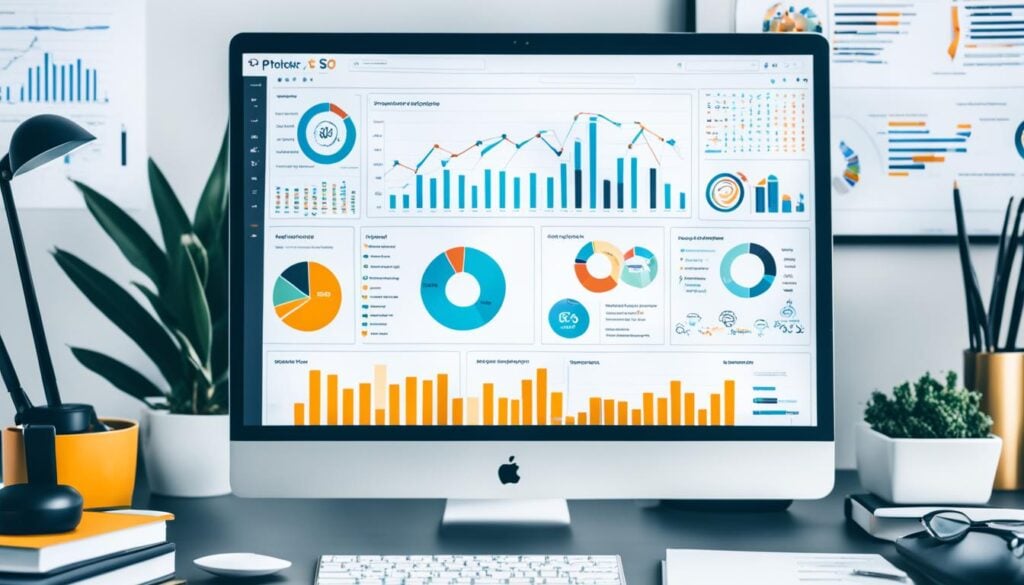
When you look into advanced optimization, two elements stand out for their ability to propel your website to the pinnacle of search results: meta tags and structured data. Mastering these components is not just about following an SEO checklist; it’s about optimizing for the changing landscape of search engine algorithms.
Maximizing the Potential of Meta Tags and Descriptions
Meta tags are the silent workhorses of SEO. They lurk in the unseen parts of your webpage, but their effect on search rankings is loud and clear. Your meta descriptions work as an elevator pitch to users who find your site on SERPs. By tailoring meta tags and descriptions to be concise and crammed with relevant keywords, you elevate the odds of captivating user interest and enhancing click-through rates.
Remember, in the quest for high SERP rankings, compelling and keyword-rich meta tags and descriptions are among your most potent allies. Utilize them wisely to create a compelling narrative that entices users to explore further.
Employing Structured Data and Schema Markup
The introduction of structured data and schema markup into your site’s code might sound intimidating, but it’s a transformative step in advanced SEO. This technique allows you to organize data in a way that search engines can not only crawl but also understand and display in creative ways, like rich snippets.
Imagine your Phoenix website displaying star ratings, price ranges, or even event dates directly on search results pages. This is the potential of structured data and schema markup—it makes your site’s listing richer and more informative, which in turn may significantly heighten your chances of attracting clicks and improving the quality of your search results.
- Start by embedding schema markup into your web pages, which can enhance content quality signals to search engines.
- Use schema to highlight specific details like reviews, product pricing, and availability—a move that can lead to featured snippets on Google.
- Keep up with Google’s ever-evolving algorithm changes that increasingly reward well-structured data with prominence in search results.
Advanced on-page SEO techniques, particularly around meta tags, schema markup, and content optimization, play a crucial role in driving your Phoenix website to greater heights. These sophisticated methods, while they may require a deeper dive into SEO, promise to powerfully align your digital presence with the desired user experience and search engine criteria.
Title Tags and Meta Descriptions: Crafting for Clicks
As you venture into the art of crafting title tags and compelling meta descriptions, remember that these are your initial handshakes with potential visitors. They are the bold text that beckons when your Phoenix website surfaces on the vast oceans of SERPs, often determining whether users click through to your content or not. It’s a delicate blend of creativity and SEO know-how that entails embedding target keywords seamlessly while presenting a concise yet tantalizing value proposition.
Think of your title tags as succinct headlines, vibrant yet precise, that concisely express the crux of your content. A well-crafted title tag should specify the subject and entice the reader, making optimal use of the 50-60 characters that search engines typically display. Place your most pertinent keywords towards the beginning, but ensure the title flows naturally – because, beyond algorithms, you’re speaking to humans with diverging desires and discerning clicks.
When it comes to meta descriptions, although they hold less sway in the ranking algorithms, they can be the deciding factor in winning that coveted click from SERP browsers. A compelling meta description serves as a persuasive summary, igniting curiosity while clearly stating what the seeker will gain by visiting your page. True, they no longer affect rankings as significantly as before, but they’re invaluable in securing SERP clicks – the portal to your audience’s attention and time.
In the nuanced tapestry of SEO, few threads weave as visibly in the SERPs as title tags and meta descriptions. Master these elements, and you’ll master the art of inviting engagement.
Below is a snapshot that illustrates how well-devised title tags and meta descriptions can powerfully impact your click-through rates:
- Begin title tags with your target keyword to establish relevance quickly.
- Meta descriptions should expand on the title, inciting interest and pointing towards a solution or benefit.
- Remember: every character counts, so make each one play a measurable role in calling for clicks.
Another game-changing detail is consistency—ensuring your on-page content resonates with the narrative promised by your title and description. When users land on your page, they should feel that they’ve reached the right destination, and the information they sought in the search engine is now vivid and fulfilling before their eyes.
By mastering the synthesis of SEO precision and creative enticement in your title tags and meta descriptions, you’ll open the door to higher traffic and improved engagement, setting a solid foundation for your online presence in Phoenix to thrive.
Enhancing User Experience through Website Performance
Focusing on the performance of your website is pivotal for delivering an optimal user experience. In Phoenix’s competitive digital space, speed and responsiveness are not just features—they are necessities. By prioritizing these aspects, you not only cater to user expectations but also fulfill search engine requirements, contributing substantially to your website’s SEO success.
Improving Site Speed and Crawlability
Site speed is a cornerstone of website performance, directly impacting user experience and SEO. Fast-loading pages keep users engaged, reducing bounce rates and signaling to search engines like Google that your site is user-friendly. Utilize tools like Google’s PageSpeed Insights to analyze and optimize your site’s speed. This powerful resource offers actionable insights into what you can improve, ensuring that your pages load swiftly across all devices.
In tandem with site speed, ensuring your website’s crawlability is essential for search engines to index your content effectively. A site that is easily navigable for bots is a site that stands a better chance of ranking well. Employing a clear site structure and robot-friendly directives encourages deeper indexing of your pages, thus enhancing their visibility on search engine results pages (SERPs).
Ensuring Mobile Responsiveness for Better Ranking
Mobile responsiveness is no longer optional—it’s a critical ranking factor in today’s mobile-first world. As more users turn to smartphones and tablets for their browsing needs, Google rewards sites that offer seamless mobile experiences. Implement a responsive design to ensure that your website adjusts flawlessly to fit any screen size, improving accessibility, and user experience. This adaptability not only pleases your users but also aligns with Google’s mobile-first indexing, propelling your Phoenix website to higher rankings.
By mastering both site speed and mobile responsiveness, you are set to enhance the overall user experience, keeping visitors on your site longer and improving your SEO standings. Focus on these technical improvements as a significant investment into your website’s performance and, ultimately, its success in the bustling Phoenix online market.
Optimizing Visual Elements for Search Engines
When optimizing your Phoenix website, one crucial aspect that should never be overlooked is optimizing your visual elements. Visual content, when enhanced correctly, can significantly boost your site’s SEO performance. The inclusion of descriptive alt tags and meaningful file names play an instrumental role in this process. Let’s pinpoint the sterling benefits of these practices:
- Assigning alt tags to images not only aids visually impaired users with screen readers but also provides search engines with necessary context, improving the indexing of your content.
- Thoughtful image file naming can enhance image SEO, ensuring search engines can swiftly discern and rank your visual content appropriately.
- Optimizing image file sizes contributes to faster page load times, impacting both user experience and SEO.
Remember, images are not merely decorative. They’re a cornerstone of user engagement and play a significant role in how search engines perceive and rank your site. These visual components can be optimized to serve as an SEO powerhouse, propelling your visibility within the fiercely competitive Phoenix digital landscape.
By optimizing visual elements wisely, you’re not just painting a prettier picture—you’re solidifying your SEO foundation, setting the stage for broader content accessibility and stronger search engine recognition.
Initiate your journey toward visual optimization by auditing existing images for proper alt tags and file names, and making the necessary tweaks. Then, continue to apply these practices to all new visual content. This vigilance ensures that each image on your site is an asset, working tirelessly behind the scenes to enhance your online prominence and user accessibility. Let’s start making your website’s visual content work smarter for SEO.
Internal Linking Strategies for Dense Website Structures
For Phoenix websites with comprehensive content, developing a robust site architecture isn’t just about creating a user-friendly experience; it’s about enhancing its visibility to search engines through strategic internal linking. This type of site structuring is pivotal in delineating a clear pathway for search engines and users alike, positioning your content in a way that maximizes SEO benefits and promotes easy navigation.
Building a Cohesive Site Architecture
Your site’s architecture is the blueprint that guides users through your digital space and communicates to search engines the hierarchy and importance of your content. By building a cohesive structure, you lay the foundations for a network of internal links that not only offer navigational benefits but also consolidate the SEO strength of your Phoenix website.
- A logical structure makes it easier for visitors to find what they are looking for, improving user engagement and time on site.
- Thoughtful categorization clusters related content, enhancing the thematic strength of pages and the site as a whole.
- A well-organized site encourages search engine spiders to crawl more deeply, ensuring better indexing of pages.
Strategic Placement of Internal Links for SEO Benefits
Intelligent internal linking transcends simple navigation; it’s an SEO power move that drives valuable traffic throughout your website, enhancing the visibility of even the deepest pages. Strategic link placement can establish a network within your Phoenix website that search engines and users value for its clarity and relevance.
- Anchor texts should be relevant and contextually integrated, pointing to authoritative pages that enrich the user’s journey.
- Linking to cornerstone content can spread page authority and raise the profile of key pages across your domain.
- Internal linking can reduce bounce rates by inviting further exploration, which signals to search engines that your site is valuable and engaging.
Incorporating a sound internal linking strategy fortifies your website’s framework, allowing you to wield control over site architecture and user flow. The SEO benefits obtained from such a system are considerable, making it possible for your Phoenix website to emerge as a content-rich, SEO-friendly powerhouse.
Conclusion
Embarking on your on-page SEO success involves embracing a full spectrum approach that extends beyond surface-level tactics. For your Phoenix website to eclipse its competitors and secure a spot at the top of search engine results, adopting effective SEO strategies becomes not just a goal, but a necessity. An SEO-optimized presence is not the product of happenstance but the result of meticulous planning and execution of SEO best practices, tailored to meet the current demands of the digital landscape.
Focusing on keyword optimization and meta tagging lays the groundwork for content that is not only compelling but also discoverable by those who seek it. Going a step further to refine site performance, optimizing visual elements, and mastering the intricacies of internal linking ensures that the infrastructure supporting your content is robust and ready for scrutiny by search engines.
As you forge ahead, cultivating an environment where on-page SEO triumphs, remain cognizant of the dynamic nature of search algorithms. Your commitment to ongoing education and adaptability in this realm will solidify your website’s standing in Phoenix and beyond. By epitomizing SEO best practices in every facet of your website – from content to technical architecture – you craft a powerful digital presence that’s built not just to contend but to dominantly endure.
FAQ
What are the Advanced On-Page SEO Techniques for Phoenix Websites?
Advanced on-page SEO techniques for Phoenix websites include optimizing meta tags with relevant keywords, employing schema markup for rich snippets, ensuring high-quality, relevant content, enhancing image optimization with alt tags, improving site speed and mobile responsiveness, and developing a strategic internal linking system. These methods help improve the website’s ranking in search engine results pages (SERPs).
Why is on-page optimization critical for a website’s SEO?
On-page optimization is critical because it helps search engine algorithms understand the relevancy and quality of your content in relation to user search queries. It involves optimizing individual web pages to rank higher in SERPs and drives more relevant traffic to your site. Proper on-page optimization also addresses technical aspects like site speed and crawlability, which are essential for a positive user experience.
How does content relevancy affect a website’s SEO?
Content relevancy affects SEO by aligning the content with search queries that users are likely to enter in search engines. Relevant content is more likely to rank higher in SERPs because it meets the user’s need for specific information. This, in turn, can lead to increased visibility and traffic for a website.
What makes content unique and in-depth from an SEO perspective?
From an SEO perspective, content is considered unique and in-depth when it offers fresh, comprehensive insights on a topic that have not been extensively covered by other sources. It should provide significant value to the reader by covering all aspects of the subject matter and be written in an engaging manner that keeps the user interested and encourages them to stay on the page longer, which can positively impact SEO rankings.
Why is clarity and structure important in SEO-focused writing?
Clarity and structure are important in SEO-focused writing because they make the content easy to read and understand for both users and search engines. Content that is well-organized and clear helps users find the information they’re searching for quickly, leading to a better user experience. Header tags, bullet points, and concise language also help search engines interpret the content’s hierarchy and main points, which can aid in better rankings.
How do technical aspects like site speed and crawlability enhance SEO?
Technical aspects like site speed and crawlability are important for SEO because they affect how search engines index and rank web pages. Fast-loading pages provide a better user experience, which is a ranking factor for Google. Crawlability ensures that search engine spiders can access and index your content effectively, which is crucial for your pages to appear in search results.
What is the importance of keyword research for Phoenix websites?
Keyword research is crucial for Phoenix websites because it helps to identify the search terms that potential customers are using. By understanding these keywords, site owners can tailor their content to better match user intent, which can increase the likelihood of their website appearing in SERPs. It also informs content creators on how to strategically place these keywords within their content for maximum SEO impact.
How can incorporating keywords into titles and descriptions improve SEO?
Incorporating keywords into titles and descriptions improves SEO by signaling to search engines what the page is about. This helps in aligning the content with user search inquiries, which can improve the page’s visibility in search results. Well-crafted titles and descriptions with keywords can also entice users to click through from the SERPs, driving more traffic to the website.
How do meta tags and descriptions drive SEO success?
Meta tags and descriptions drive SEO success by providing search engines with concise information about the content of the page. When optimized with target keywords, they help improve the relevance of the page to specific search queries, contributing to higher rankings. They also entice users to click on your links by offering a clear value proposition, which can increase traffic and engagement.
Why is it beneficial to use structured data and schema markup on a Phoenix website?
Using structured data and schema markup is beneficial on a Phoenix website because it allows search engines to better understand the content and context of the site’s pages. This can lead to the creation of rich snippets in SERPs, which enhance visibility and may increase click-through rates by providing users with more information upfront, like reviews or event dates, right within the search results.
How does improving site speed and mobile responsiveness impact user experience?
Improving site speed and mobile responsiveness greatly impacts the user experience by making a website more accessible and easier to navigate on various devices, including smartphones and tablets. Websites that load quickly and are easily viewable on mobile devices tend to have lower bounce rates and higher user engagement, which are factors that Google considers in its search rankings. Plus, Google has switched to mobile-first indexing, making mobile responsiveness even more critical for SEO.
What are the SEO benefits of strategic placement of internal links within a Phoenix website?
The strategic placement of internal links within a Phoenix website can enhance SEO by spreading page authority throughout the site, improving the navigability for users, and helping search engines establish an information hierarchy. This approach also encourages users to spend more time on the site by easily finding related content, leading to a better user experience and potential improvements in search rankings.